
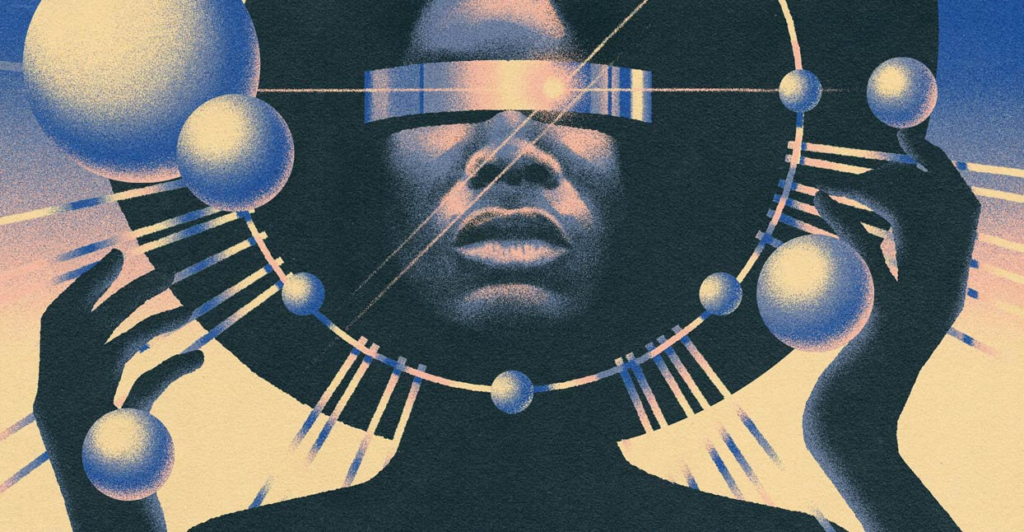
Before The Beat – [THE SCIENCE OF THE DANCE FLOOR]
Before The Beat - [THE SCIENCE OF THE DANCE FLOOR]
Why I Study Music the Way I Play It
I graduated in Psychology from the University of Malta, where my academic research focused on depression and the human emotional system. My thesis explored how mood, cognition, and physiology interact how the mind and body influence one another in states of vulnerability. Years later, standing behind a DJ booth, I began noticing something familiar.
The same patterns I had studied in lecture halls and research papers were unfolding in real time on the dance floor. Shoulders tightening when tension builds. Eyes closing during melodic breaks. Micro- expressions shifting when a
chord resolves. The subtle change in posture when a steady kick stabilises the room. As both an artist and a psychologist, I became deeply interested in what was happening beneath the surface. Electronic music is often discussed in terms of genre, trend, or taste. But I approach it differently. I build my sets and increasingly, my writing around scientific principles of emotion, regulation, anticipation, and embodied response.
Rather than relying solely on experience or intuition, I pay attention to nervous system dynamics, hormonal responses, collective synchronisation, and the psychology of expectation. The dance floor, to me, is not just a crowd. It is a living organism responding to rhythm, tension, and release. Melodic techno, in particular, fascinates me because of its dual nature. Mechanical repetition regulates the body. Harmonic evolution opens emotional space. The breakdown becomes a moment of exposure. The drop becomes resolution.
This article is part of a broader exploration into the origins of music, the biology of sound, and why certain frequencies can make us feel grounded, connected, and sometimes unexpectedly tender. Before we speak about trends or scenes, we must understand something deeper: What does music actually do to us? Let’s begin there.
Machines, Melodies, and the Mind Why Electronic Music Moves the Body and Melodic Breaks Touch the Heart
Electronic music is often described as mechanical. Repetitive. Synthetic. Built
from machines. And yet, in the middle of a melodic techno set, when the kick drops out and a fragile synth line rises into the dark, something deeply human happens. People close their eyes. Shoulders soften. Strangers hug. Some even cry. How can mechanical sound create warmth? Why does repetition feel regulating and melody feel intimate? The answer lies in how the brain and body respond to rhythm, contrast, and expectation.
The Body Locks to the Beat
The human nervous system is wired for rhythm. When we hear a steady pulse, the brain doesn’t just listen it synchronises. This process, known as neural entrainment, means our internal rhythms begin to align with external sound. Research in auditory motor coupling shows that the brain naturally links rhythmic sound with movement systems, which is why we instinctively tap our feet or nod our heads to music (Nozaradan, 2014; Thaut et al., 2015). That steady 120–130 BPM kick in melodic techno isn’t just driving the track forward. It is giving the body something predictable to attach to. Predictability signals safety to the nervous system. When patterns are stable, the brain reduces uncertainty. Repetition can lower cognitive load and help regulate arousal. In group contexts, synchronised movement has also been linked to increased feelings of social bonding and cooperation (Tarr, Launay & Dunbar, 2014). The “machine” part of electronic music the kick, the loop, the pulse becomes a regulator.
Hormones, Stress, and Reward
Music doesn’t just affect mood. It affects biology. Studies show that pleasurable music listening is associated with dopamine release in the brain’s reward system (Salimpoor et al., 2011; 2015). Dopamine is involved in anticipation and reward which helps explain why builds and drops feel powerful. The brain predicts what’s coming, tension accumulates, and when the resolution arrives, reward circuitry activates. Music has also been shown to influence stress markers. Various studies in music therapy research indicate that listening to or engaging with music can reduce cortisol (a primary stress hormone) and influence autonomic nervous system activity (Chanda & Levitin, 2013). Movement to rhythm further enhances this effect. Physical activity releases endorphins, and synchronised group movement may increase feelings of connection and social cohesion. The club is not just loud. It is biochemical.
The Breakdown: When the Machine Becomes Human
In melodic techno, the kick often drives steadily structured, grounding, almost industrial. Then suddenly, it disappears. The bass drops away. The percussion thins. A melody emerges. Why does this feel so emotional? Because contrast alters nervous system state. Repetition activates motor and timing systems. When it stops, the rain shifts attention. Harmonic elements chords, pads, evolving leads move into the foreground. Melodies resemble emotional vocal expression more than percussion does. Research on music and emotion shows that humans are highly sensitive to pitch contour, harmonic tension, and resolution patterns, many of which mirror the way emotion is expressed in speech (Juslin & Västfjäll, 2008). In breakdowns, theree is exposure. Vulnerability. The rhythmic “armor” is removed, and harmonic color takes over. The body is already regulated by repetition. The guard is lowered. And then harmony enters. That combination safety plus emotional expression can produce warmth.
Why It Can Feel Like Love
Music is a prediction engine. The brain constantly anticipates what will happen next. When melodic techno delays a drop, stretches a chord progression, or resolves harmonic tension after buildup, it engages neural mechanisms related to expectation and reward (Huron, 2006). When esolution finally occurs, dopamine pathways respond. But there is also something more subtle happening. Certain harmonic intervals, minor tonalities, and slow-evolving textures are frequently associated with nostalgia, tenderness, or longing. These emotional responses are not random; they are shaped by both cultural conditioning and innate sensitivity to tonal relationships. Inside a dance floor environment dark, immersive, socially synchronised emotional cues amplify. Collective movement enhances shared affect. The result can feel deeply intimate, even though it is created by synthesisers and sequencers. The mechanical beat grounds the body. The melody opens the heart.
Regulation, Not Escape
Electronic music is often framed as escapism. But from a nervous-system perspective, it can function as regulation. Repetition stabilizes attention. Movement discharges excess arousal. Predictable rhythm reduces chaos. Gradual harmonic evolution allows emotion to surface in manageable waves. Music therapy research consistently shows that structured musical experiences can support emotional processing, stress reduction, and mood regulation (Chanda & Levitin, 2013). Melodic techno is particularly effective because it avoids constant shock. It builds slowly. It sustains atmosphere. It creates continuity. In a world of fragmentation and overstimulation, sustained immersion becomes restorative. The dance floor becomes a container. The rhythm becomes scaffolding. The breakdown becomes emotional opening.
Machines Were Never the Opposite of Emotion
The brain does not distinguish between “organic” and “synthetic” sound in the way culture does. It responds to frequency, rhythm, contrast, and harmonic structure. Ancient rituals used drums to induce trance. Modern producers use sequencers and modulators. The tools evolved. The nervous system did not. Melodic techno works because it balances two forces: Structure and surrender. Pulse and vulnerability. Machine and melody. The beat steadies us. The break softens us. And somewhere between the two, biology and emotion meet.
References
Chanda, M. L., & Levitin, D. J. (2013). The neurochemistry of music. Trends in Cognitive Sciences, 17(4), 179–193. Huron, D. (2006). Sweet Anticipation: Music and the Psychology of Expectation. MIT Press. Juslin, P. N., & Västfjäll, D. (2008). Emotional responses to music: The need to consider underlying mechanisms. Behavioral and Brain Sciences, 31(5), 559– 621. Nozaradan, S. (2014). Exploring how musical rhythm entrains brain activity. Frontiers in Human Neuroscience, 8, 1–12. Salimpoor, V. N., et al. (2011). Anatomically distinct dopamine release during anticipation and experience of peak emotion to music. Nature Neuroscience, 14(2), 257– 62. Salimpoor, V. N., et al. (2015). Interactions between the nucleus accumbens and auditory cortices predict music reward value. Science. Tarr, B., Launay, J., & Dunbar, R. I. M. (2014). Music and social bonding: “Selfother” merging and neurohormonal mechanisms. Frontiers in Psychology. Thaut, M. H., et al. (2015). Rhythmic entrainment of the brain and movement. Frontiers in Psychology.